Where emissions actually originate in amine systems
Emissions associated with amine units rarely originate from the absorber itself. Instead, they tend to emerge indirectly—through solvent degradation, venting during maintenance, and frequent reclaiming or replacement cycles.
Thermal stress, oxygen ingress, and trace contaminants contribute to the formation of heat-stable salts and degradation by-products. Over time, these compounds reduce solvent effectiveness and accelerate corrosion, forcing corrective interventions that increase emissions exposure.
“Most of the emissions we deal with aren’t tied to treating efficiency—they’re tied to how often we have to intervene,”
— Gas Treating Operations Lead, Natural Gas Facility
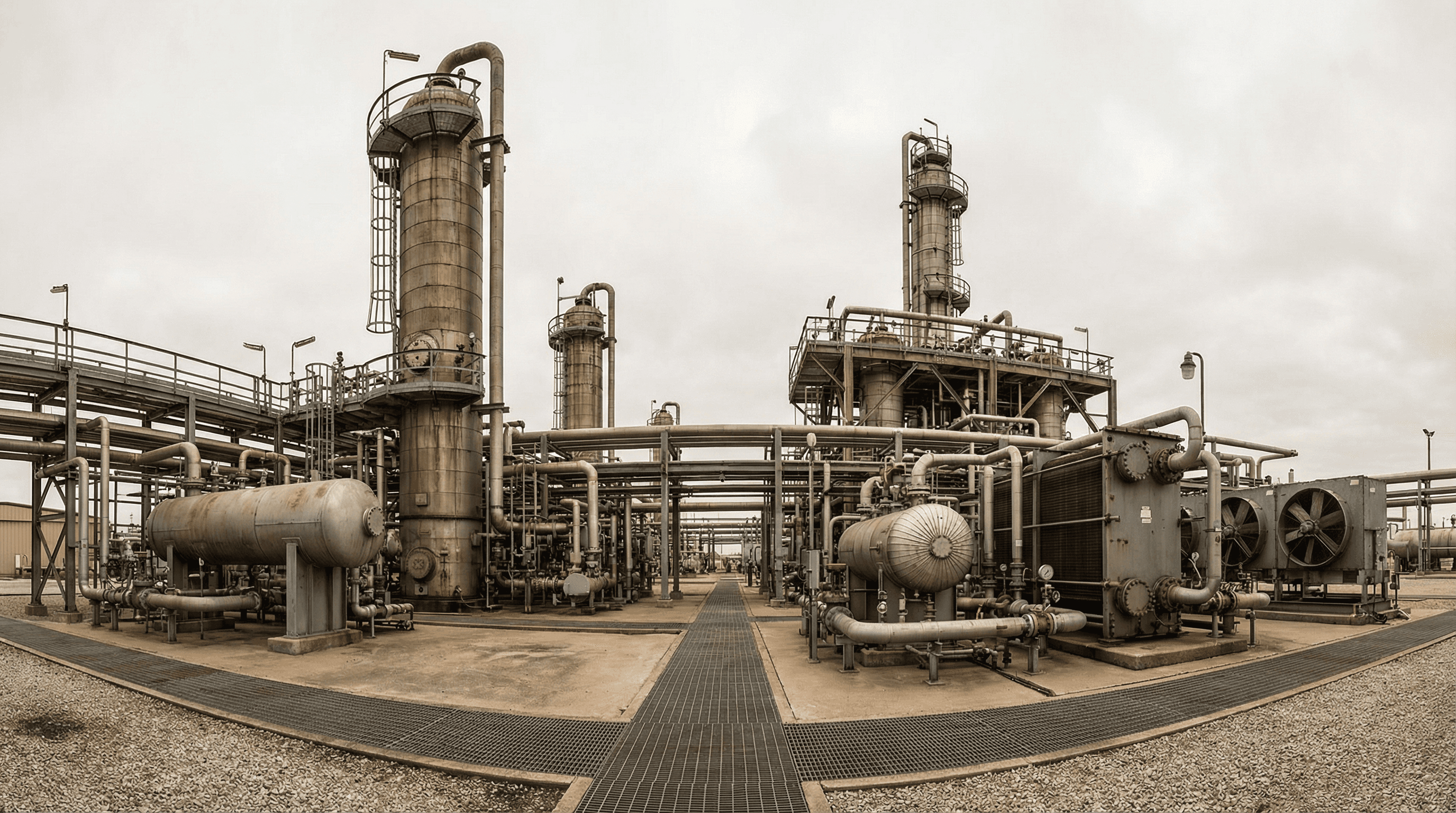
Amine gas treating unit during routine operation.
Lower-toxicity amines and solvent stability
Lower-toxicity amine programmes are designed to slow degradation pathways rather than compensate for them. By improving resistance to thermal and oxidative breakdown, these formulations help maintain solvent integrity over longer operating periods.
Greater stability reduces the accumulation of degradation products, which in turn limits corrosion risk, foaming tendency, and solvent losses. From an operational standpoint, this translates into fewer unplanned interventions and more consistent treating performance.
Reduced intervention as a measurable outcome
When solvent integrity is preserved, reclaiming frequency decreases. Fewer reclaiming cycles mean lower solvent disposal volumes, reduced venting events, and less waste handling—all of which contribute to measurable emissions reduction without altering core process design.
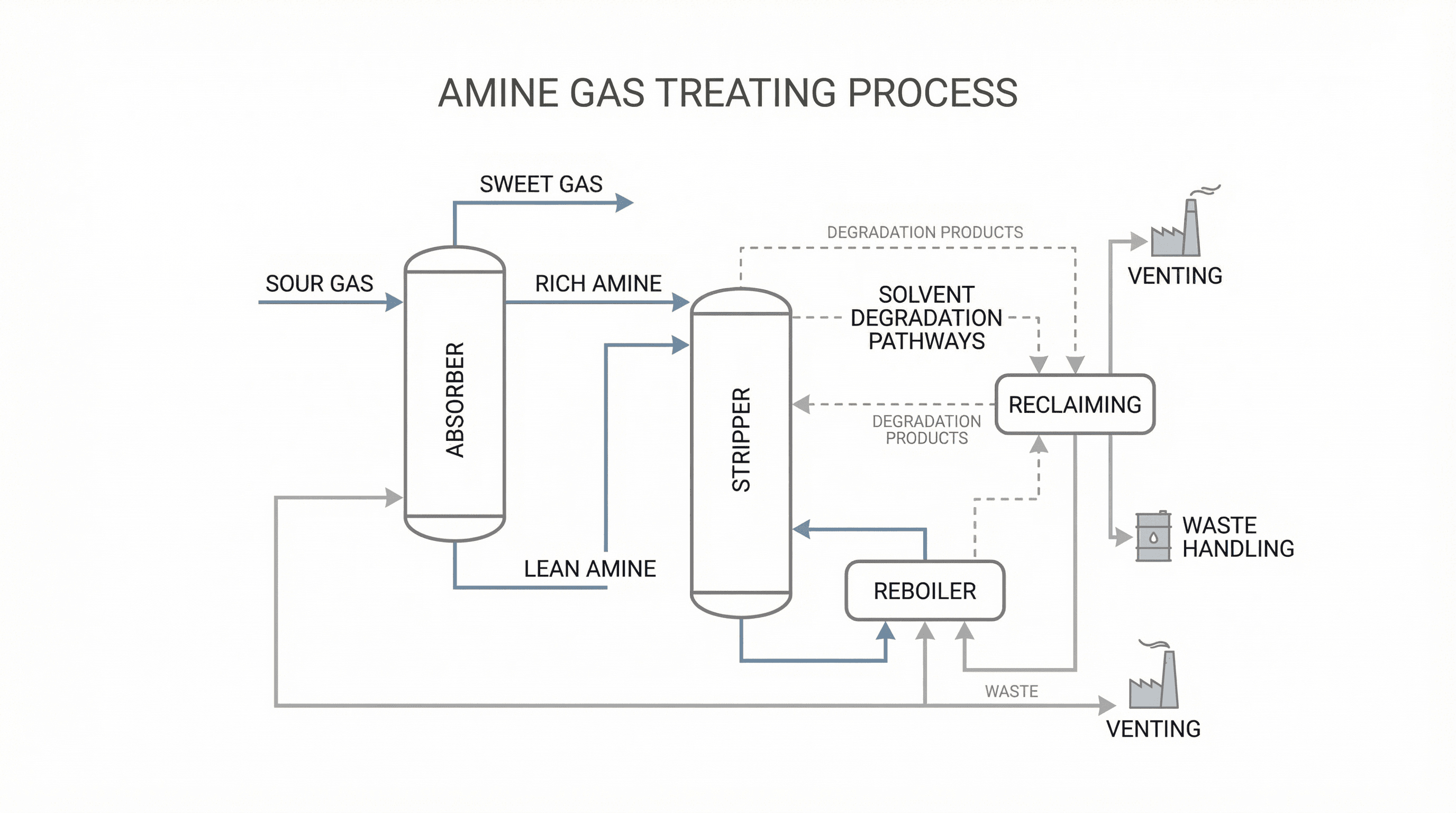
Simplified representation of solvent degradation pathways and secondary emission points.
Linking operational predictability and emissions performance
Rather than treating emissions reduction as a standalone objective, lower-toxicity amine programmes embed environmental performance within routine operational optimisation.
Improved solvent stability leads to:
fewer corrective shutdowns
reduced maintenance-related venting
more predictable operating cycles
This alignment allows facilities to meet regulatory expectations as a consequence of better system control, rather than through additional layers of mitigation.
“Once solvent behaviour becomes predictable, emissions performance improves almost automatically,”
— Technical Specialist, Gas Treating Systems
Practical implications for operators
For operators, the value lies less in headline performance claims and more in consistency. Programmes that extend solvent life and reduce intervention frequency simplify planning, lower operational risk, and support compliance without introducing complexity.
In practice, measurable emissions reduction in amine systems is often the result of improved solvent management rather than more aggressive treatment strategies. Lower-toxicity programmes reflect a shift toward stability, predictability, and lifecycle thinking—principles that support both operational and environmental performance over time.
Alchemist Technologies works with industrial operators to assess system conditions, treatment strategies, and execution requirements—supporting reliable performance across energy, water, and process environments.